

In retaliation for the Pahalgam massacre, India revoked the Indus Water Cooperation Treaty. Will the lifeline of the Brahmaputra valley — the Brahmaputra river itself — run dry too?
Although the Indus River and its tributaries are 2,500-3,000 kilometers away from Assam, China’s unexpected involvement in this conflict between India and its eternal rival, Pakistan, has raised alarm bells in Assam.
On Friday and Saturday last week, India reportedly reduced the flow of water in the Chenab river (also known as Chandrabhaga) that flows into Pakistan by 144,000 cusecs. Following this, China has indirectly threatened India by raising the possibility of stopping the flow of the Brahmaputra, which flows into Assam.
The Government of India has made no official announcement regarding the reduction of Chenab’s water flow. However, Pakistan’s Water and Power Development Authority (WAPDA) claims that India has reduced the water flow of the Chenab. On Saturday, WAPDA made public data on the river’s flow. According to Pakistan, on Thursday, the water flow of the Chenab at Marala, within Pakistan, was 98,200 cusecs. But from Friday, the flow started to decrease. On Friday, it dropped to 44,800 cusecs, and on Saturday, it plummeted further to just 7,200 cusecs.
In other words, as of last Saturday, India’s share of the Chenab’s flow had decreased by 91,000 cusecs compared to Thursday. On Friday alone, the reduction was 53,400 cusecs. Overall, in two days, the flow into Pakistan fell by 144,000 cusecs.
While India has not officially acknowledged this reduction, China has quickly picked up on Pakistan’s data and indirectly threatened India by asking, “What will happen if we do the same with the Brahmaputra’s flow to Assam?”
A report in the ‘Dawn’ newspaper claims that Pakistan has accused India of cutting off the Chenab’s water flow.
For context, a cusec (CUSEC) is a unit measuring the flow of one cubic foot of water per second, equivalent to 28.32 liters per second.
Whether or not India has actually stopped the Chenab’s flow, Victor Zhikai Gao, Vice President of the Beijing-based Center for China and Globalization, has warned India in a threatening tone: “Don’t do to others what you don’t want done to you.”
He told India Today: “Beijing has a strategic grip over the Brahmaputra’s water flow, which is critical for India. Before New Delhi cuts off others’ water, it would be wise to think of the consequences for itself.”
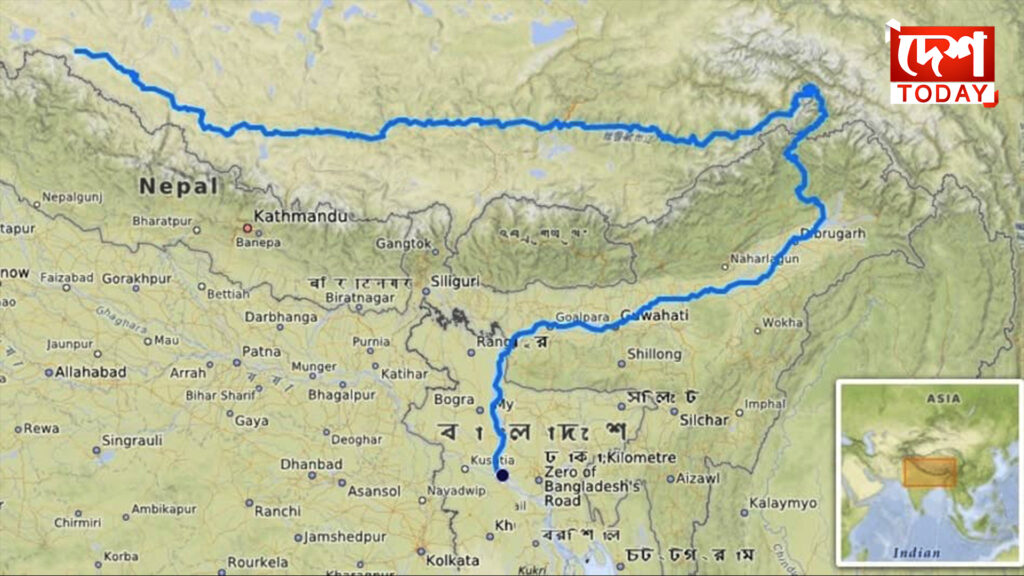
In January, Beijing openly revealed plans to build the world’s largest dam on the Brahmaputra in Tibet. This $137 billion project will reportedly use cutting-edge technology.
Worryingly, since 2022, China has not shared any hydrological data on the Brahmaputra with India. China claims the earlier information-sharing agreement has expired and no new agreement has been reached, so it has stopped sharing data. As a result, India has not received any data on the Brahmaputra’s flow from China for the last two and a half to three years.
Known as the Yarlung Tsangpo in China, this river is the Brahmaputra in Assam and supplies one-third of India’s freshwater. Nearly 40% of the Brahmaputra’s flow in India can be harnessed for hydropower projects. The river is critical to the ecology and biodiversity of Assam and the entire Northeast, and it sustains the vast Brahmaputra valley.
When asked by India Today whether China would reduce the Brahmaputra’s flow to help Pakistan, Victor Gao did not give a direct answer, but he issued a stark warning to India three times: before harming others, India should think about what it would do if the same harm were done to it.
Needless to say, China is now Pakistan’s “all-weather friend” and very close ally.
In Pakistan’s recent conflict with India, China has openly provided military aid, including fighter jets, missiles, and air defense systems. After the ceasefire, Pakistan’s Deputy Prime Minister Ishaq Dar’s first foreign trip was to China, where in August he secured the delivery of 25-40 J-10C “Firebird” fifth-generation stealth fighter jets for Pakistan’s air force.
Given this deep friendship, there’s little doubt that if Pakistan faces a water crisis, China will try to hurt India by reducing the Brahmaputra’s flow. Victor Gao’s threatening tone echoes this possibility.
India, for now, has not responded to Gao’s threats. After the terrorist attack in Pahalgam on April 22, India temporarily suspended the Indus Water Cooperation Treaty and has stuck to that decision.
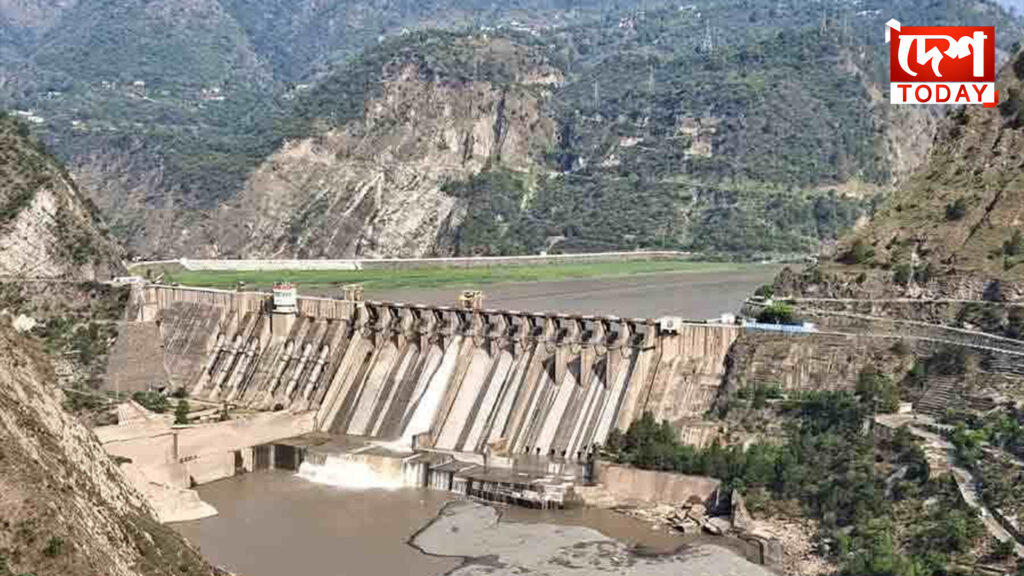
Three major Indian hydropower projects exist on the Chenab: the Pakal Dul Dam, the Baglihar Dam at Ramban, and the Salal Dam. The Pakal Dul reservoir can store 88,000 acre-feet of water, Baglihar can store 321,000 acre-feet, and Salal can store 228,000 acre-feet.
India has also decided to build reservoirs on the Beas, Sutlej, and Ravi rivers to store water that would otherwise flow into Pakistan.
However, these projects are expensive and time-consuming. For now, it appears India has already begun controlling the Chenab’s flow without making any public announcement. But given China’s threats, what the ultimate outcome will be remains uncertain.