
, after conducting an in-depth survey, has identified and estimated the presence of rare mineral deposits in Assam and several other Northeastern states.)
Assam, known for its abundant reserves of crude oil, natural gas, and coal, has now revealed the presence of rare and valuable mineral resources beneath its surface. Undoubtedly, there are formidable challenges in extracting these underground treasures. However, if the ‘double-engine’ government can overcome these obstacles with firm resolve, the destiny of Assam could change drastically in the near future. On the other hand, if these valuable assets fall into the greedy hands of private corporations, the fate of Assam and its people may be dictated by corporate owners rather than public interest.
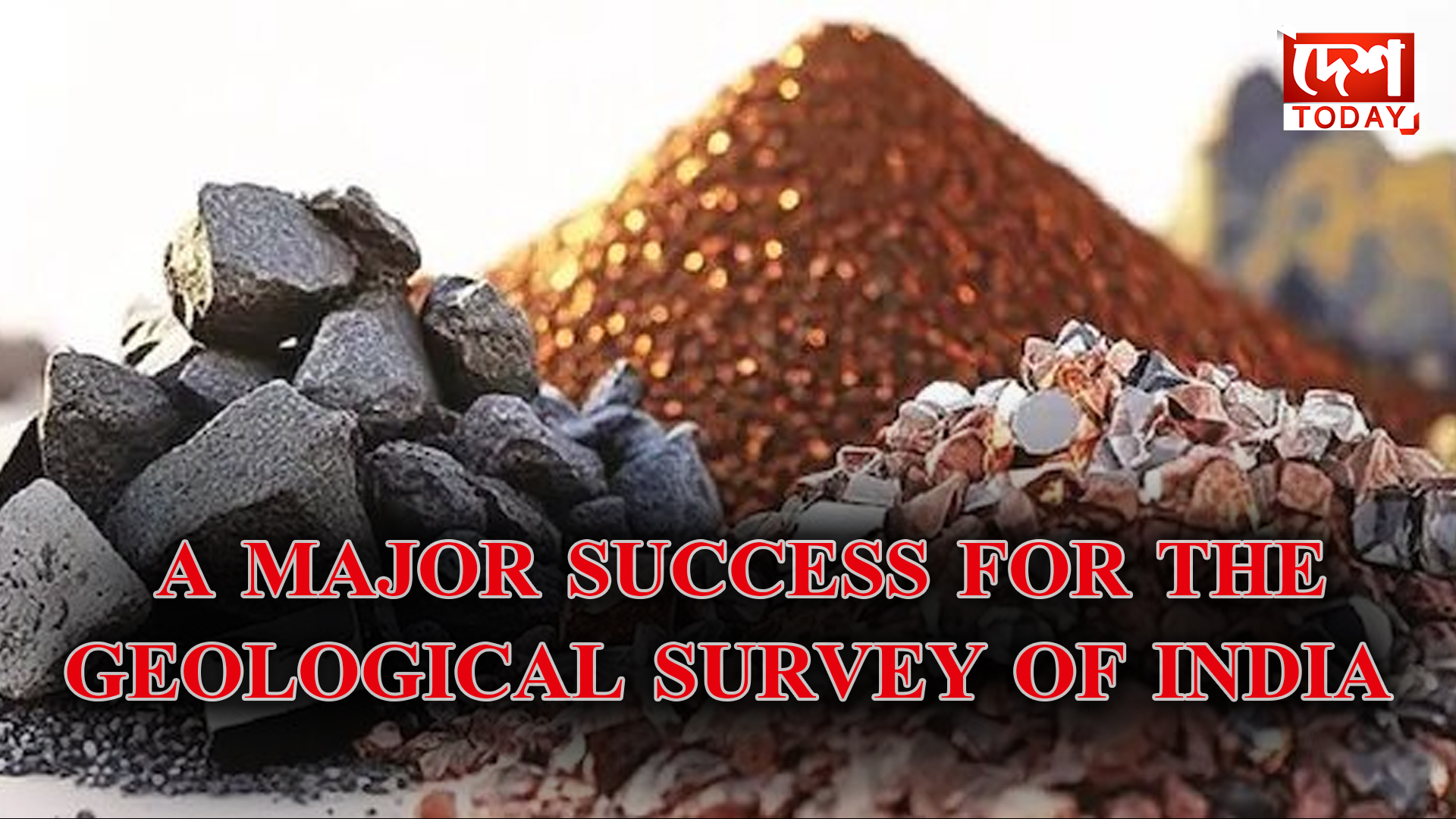
The Geological Survey of India (GSI), after conducting an in-depth survey, has identified and estimated the presence of rare mineral deposits in Assam and several other Northeastern states. This revelation by GSI has been taken very seriously by the Central Government, as these minerals can play a crucial role in clean energy transitions, electric vehicle production, digital infrastructure development, and defense manufacturing.
GSI has discovered Rare Earth Elements (REEs), graphite, vanadium, lithium, cobalt, and other minerals essential for battery and semiconductor production in Assam. The GSI has published its findings in a detailed 57-page report, highlighting the mineral wealth discovered in Assam and the Northeast.
To comprehensively study the types of minerals that could be present in this geologically rich region and how they could be used to meet India’s growing demands, the National Mineral Exploration Trust funded the GSI’s exploration. Using thematic studies, baseline surveys, and project-based investigations, the GSI has identified and mapped out these resources across the region.
Most significantly, compiling all this information, GSI has published a 38-page handbook titled “Exploration Blocks Ready for Auction in NER” (North Eastern Region). This handbook clearly outlines the locations and volumes of mineral blocks in Assam and other states that are ready for auction. The availability of this information in the public domain confirms that the auctioning of Assam’s mineral resources is not a secret—it’s a known fact.
What minerals have been found in Assam?
In Assam, discoveries include Rare Earth Elements (REEs), Rare Earth Magnets (REMs), limestone, gold ore, graphite, iron ore, vanadium, and silica.
In the entire Northeast, 38 mineral blocks have been discovered, with Assam topping the list. Karbi Anglong district alone contains a reserve of 28.8 million tonnes of rare earth-rich syenite. Dima Hasao has a limestone reserve of 1,490 million tonnes. Golaghat and Cachar districts hold large reserves of silica.
The Samchampi and Samteran hills of Karbi Anglong are rich in Rare Earth Elements. Likewise, the districts of Dhubri (likely Chapar), Goalpara (possibly Paikan), and Kokrajhar (possibly Parbatjhora) have been identified as rich in various mineral resources by the GSI report. According to the report, iron ore has been found in Dhubri. Unconfirmed reports suggest that a permanent army camp is being considered for the area in Dhubri. Gold ore has also been discovered in a river valley location.
What’s particularly notable is that China was once the world’s largest exporter of Rare Earth Elements (REEs). These are crucial for the production of electric vehicles. In April, China halted exports of REEs and finished magnets (REMs), which triggered a crisis for India and Western nations. In the financial year 2024–25, India imported a total of 540 tonnes of REMs or finished magnets—80% of which came from China. India’s Commerce and Industry Minister Piyush Goyal called this development a “wake-up call.”
In this context, the discovery of REEs and REMs in Assam is naturally a treasure of immense value for the nation. These minerals can significantly contribute to India’s recent technological and industrial development—no doubt about it.
In this scenario, the Central Government’s top priority is now to extract these resources by removing all hurdles. Many believe that the fast-paced construction of roads, bridges, railways, and the Dhubri-Phulbari Brahmaputra bridge is a strategic move to facilitate the transportation of these resources.
Since these minerals are spread across both forested and inhabited areas, they are considered the primary hurdle to resource extraction at present. Overcoming these barriers now lies squarely on the shoulders of the ‘double-engine’ government.